A Thoughtful Guide to Coffee Grinders
TL;DR
DO I REALLY NEED A BETTER GRINDER - AND WHICH ONE SHOULD I CHOOSE?
A better grinder is one of the most effective ways to improve your coffee, but only once you are ready for it. You do not need the most expensive option. What matters is choosing a grinder that suits how you brew, fits your space, and makes good coffee easier and more consistent. At this level, you are paying for clarity, reliability, and fewer compromises – not status. The right grinder can easily be the last one you ever need.
Anthony, Founder of The Fifth
The quiet cornerstone
If you want better coffee at home, the grinder matters more than almost anything else. More than the machine. More than the brew method. Often, more than the beans themselves.
That might sound dramatic, but it is simply practical. Coffee starts losing flavour the moment it is ground. A good grinder lets you grind fresh, grind consistently, and do it in a way that suits how you actually brew.
This guide is not about the “best” grinder. There is no single best. Instead, it is about helping you choose the right grinder for your habits, your kitchen, and your coffee preferences - without wading through forums or spec sheets.
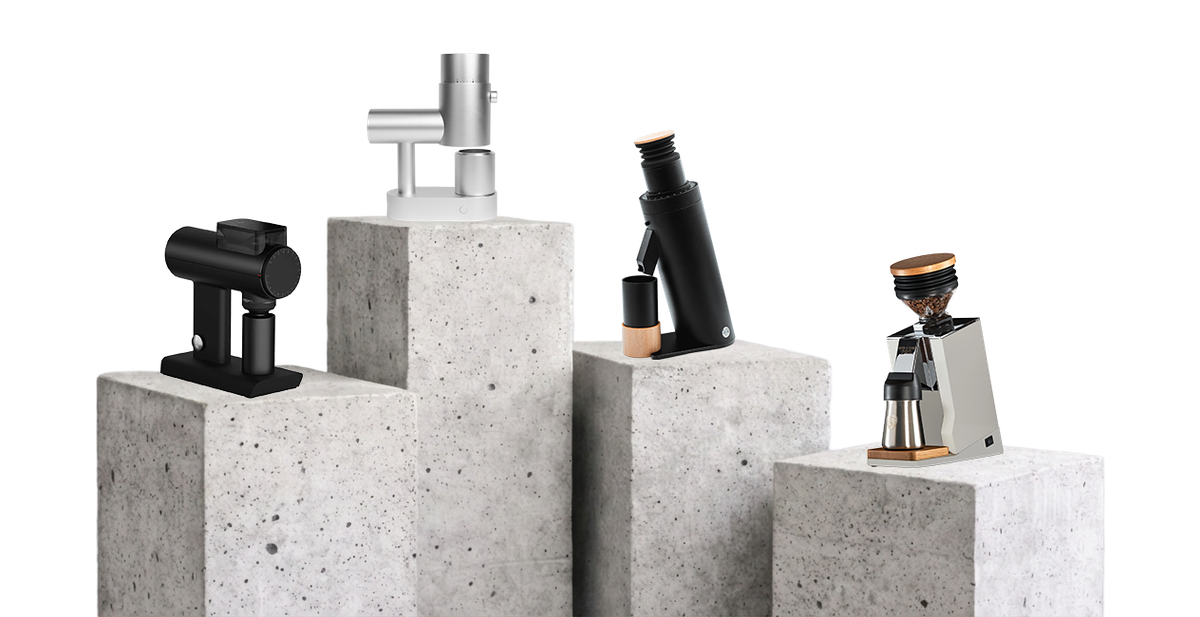
We have focused on thoughtfully designed grinders that do one thing well, whether that is filter coffee, espresso, portability, or single-dose flexibility.
Who this guide is really for
There are hundreds of coffee grinders out there, from very cheap to very expensive, and many of them can make perfectly drinkable coffee. This guide is not an attempt to cover all of them.
What we are focusing on here is a particular moment in the coffee journey.
If you are just moving away from instant coffee or pods, you are doing nothing wrong. Equally, if you are using a bean-to-cup machine or an espresso machine with a built-in grinder, you are exactly where many people start. Those machines exist for a reason, and they can make genuinely enjoyable coffee with very little effort. Pair one with good beans, and you are already well ahead of the curve.
This guide is for what often comes next.
It is for people who have started to notice the limits of cheaper or integrated grinders. Maybe you have already spent £100 - £200 on a standalone grinder and feel there is more potential in your coffee. Maybe you are thinking about separating grinder and machine for the first time. Or maybe you are simply curious why enthusiasts keep saying the grinder is the real cornerstone of brewing better coffee.
The grinders in this guide are not cheap. But in the wider world of coffee equipment, they are also not excessive. They sit in that middle ground where the price starts to feel justifiable because the improvement is real, repeatable, and long-term.
Think of this as a curated shortlist rather than a shopping list. An aspirational reference point for people ready to take a meaningful step forward, and a useful compass for those who are not there yet but want to understand where things might lead.
If this feels like a bridge too far right now, that is fine. Enjoy the coffee you are making today. If it feels like the right moment to invest in the cornerstone of better brewing, this is where we would start looking.
Why the grinder matters more than the coffee machine
A coffee machine controls water temperature and pressure.
A grinder controls flavour.
Grind size and consistency determine how evenly coffee extracts. Too uneven, and you can end up with bitterness and sourness in the same cup. Too stale, and even excellent beans taste flat.
A better grinder gives you:
- More clarity and sweetness
- Better consistency from cup to cup
- Less frustration when dialling in
- Better results across all brew methods
This is why many experienced coffee drinkers upgrade their grinder before anything else.
| Lorem ipsum dolor sit amet, consectetur adipiscing elit. | Lorem ipsum dolor sit amet, consectetur adipiscing elit. | Lorem ipsum dolor sit amet, consectetur adipiscing elit. | Lorem ipsum dolor sit amet, consectetur adipiscing elit. |
| 123456 | dfgdghjmhg | 456 | 546664 |
| 564ytegj | 'po98765juk | efgrthryjtu | esrgeht wtrehtjyu746u76 |
Start here: how do you actually brew coffee?
Before looking at models, it helps to be honest about how you make coffee most days:
- Filter only - pour-over, Aeropress, batch brew, cafetière
- Filter first, espresso occasionally
- Espresso most days
- Both filter and espresso, regularly
- Small kitchen or travel setup
Once you know that, the options narrow quickly - and the choice becomes much easier.
A note on price and diminishing returns
Spending more on a grinder does improve results - up to a point.
The biggest leap comes from moving away from cheap, inconsistent grinders. Beyond that, higher prices tend to buy refinement rather than transformation: quieter motors, smoother adjustment, nicer materials, and more forgiving workflows.
A £300 - £600 grinder paired with good coffee and a thoughtful brew routine will outperform a far more expensive setup used carelessly.
At-a-glance: our curated grinder shortlist
[Table]
So, which grinder should you choose?
A simple way to decide:
- Filter only, no interest in espresso
Choose the Fellow Ode Gen 2. - Filter first, small kitchen or travel
Choose the Lagom Mini. - Espresso most days, occasional filter
Choose the Niche Zero or a Eureka single-dose grinder. - Espresso and filter, flat-burr clarity, where the investment starts to make sense
Choose a DF64-style grinder or Timemore Sculptor. - Espresso-focused, compact and premium
Choose the Lagom Casa.
No - and it is worth saying that clearly.
You can enjoy very good coffee using pods, bean-to-cup machines, or entry-level grinders, especially if you are buying fresh, well-roasted coffee and brewing it with a bit of care. Plenty of people stop there and are perfectly happy.
Upgrading your grinder becomes worthwhile when you want more consistency and clarity, or when you start noticing that different coffees taste more similar than you expect. At that point, the grinder often becomes the limiting factor.
It is not a requirement. It is simply one of the most effective ways to unlock more flavour once curiosity starts to grow.
In most cases, yes - but that does not mean built-in grinders are “bad”.
Built-in grinders are designed around convenience, space, and simplicity. Standalone grinders can focus entirely on grind quality, consistency, and adjustability, which usually leads to better extraction and more repeatable results.
That said, many people use integrated grinders for years before feeling any need to change. A separate grinder makes sense when you want more control, easier dialling in, or the flexibility to switch between brew methods.
The price reflects where meaningful improvements start to show up reliably.
At this level, you are paying for better burrs, tighter tolerances, more consistent motors, lower retention, and workflows that feel calmer and more predictable day to day. Those things translate directly into better-tasting coffee and less frustration.
Cheaper grinders can work, but they often introduce variability that is hard to work around. The grinders in this guide sit at the point where gains stop being theoretical and start being obvious.
For most people, yes.
A grinder affects every cup you brew, regardless of method. A better machine can improve temperature stability or pressure control, but it cannot fix uneven or inconsistent grinding.
That is why many experienced coffee drinkers upgrade their grinder before changing anything else. It tends to deliver the biggest improvement, the fastest.
They are suitable for curious beginners, rather than absolute beginners.
If you are coming straight from instant coffee or pods, this tier may feel like a big step. If you already enjoy brewing at home, have experimented a little, and want coffee that tastes clearer, sweeter, and more expressive, these grinders make sense.
You do not need to be an expert to use them - but you do need to enjoy the idea of paying a bit of attention to how you brew.
You do not have to, but it is not unusual.
A modest machine paired with a very good grinder will often outperform an expensive machine paired with a poor grinder. Balance matters more than headline price.
Many people end up investing more in their grinder because it lasts longer, adapts to different machines, and continues to pay off even as the rest of the setup changes.
Quite possibly, yes.
Every grinder in this guide is good enough to be a long-term companion rather than a stepping stone. They are well built, thoughtfully designed, and capable of producing excellent coffee day after day.
There are always bigger and more expensive grinders available. But beyond this tier, improvements tend to be about refinement rather than transformation – quieter motors, heavier builds, or marginal gains that only become obvious with very specific preferences.
For most people, a grinder at this level is not something to outgrow. It is something to settle into. Learn how it behaves, pair it with good coffee, and brew with care, and it could easily be the last grinder you ever need.
Upgrading later is a choice, not a requirement - and usually driven by curiosity rather than necessity.